
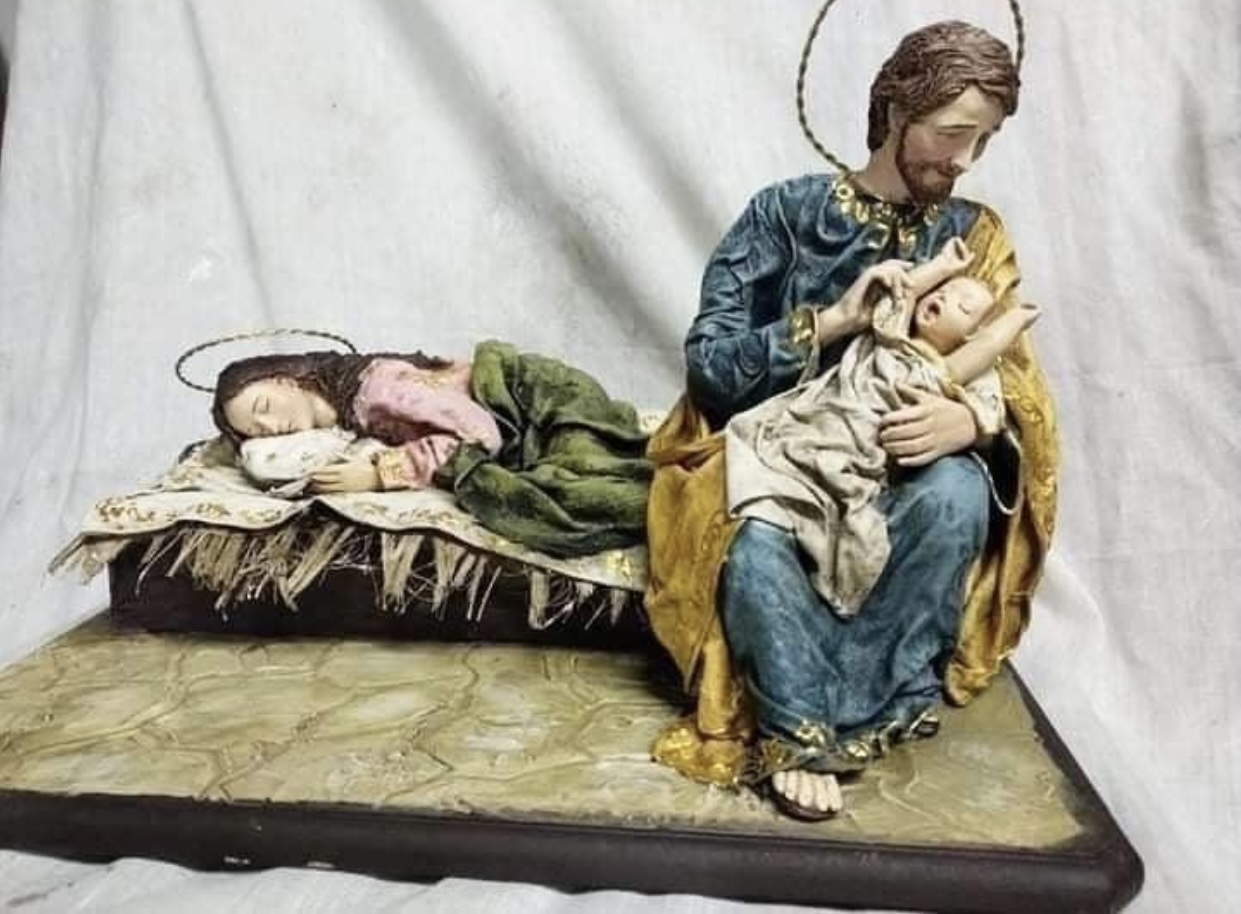
There is one detail that stands out more than any other in this rare representation of the Holy Family: Mary is sleeping.
She is not praying, not contemplating, not posing. She is sleeping. And in her sleep lies total trust, because someone is keeping watch.
Joseph is seated, his body slightly leaning forward, as fathers do when crying comes suddenly and there is no time for words. He holds the Child in his arms, cares for Him, consoles Him. He does not speak. He does not teach. He loves by doing.
A humanized Holy Family
This scene, rooted in the tradition of southern Italian nativity art between the eighteenth and nineteenth centuries, belongs to a spirituality that rejects idealization in order to embrace the human.
Not a distant, untouchable Holy Family, but a real family, marked by fatigue, night, and need.
Here God is not power, but fragility.
He does not dominate; He asks.
He does not triumph; He weeps.
The Child is not an icon: He is a body that demands care. He is the God of the Incarnation carried to its most radical consequences.
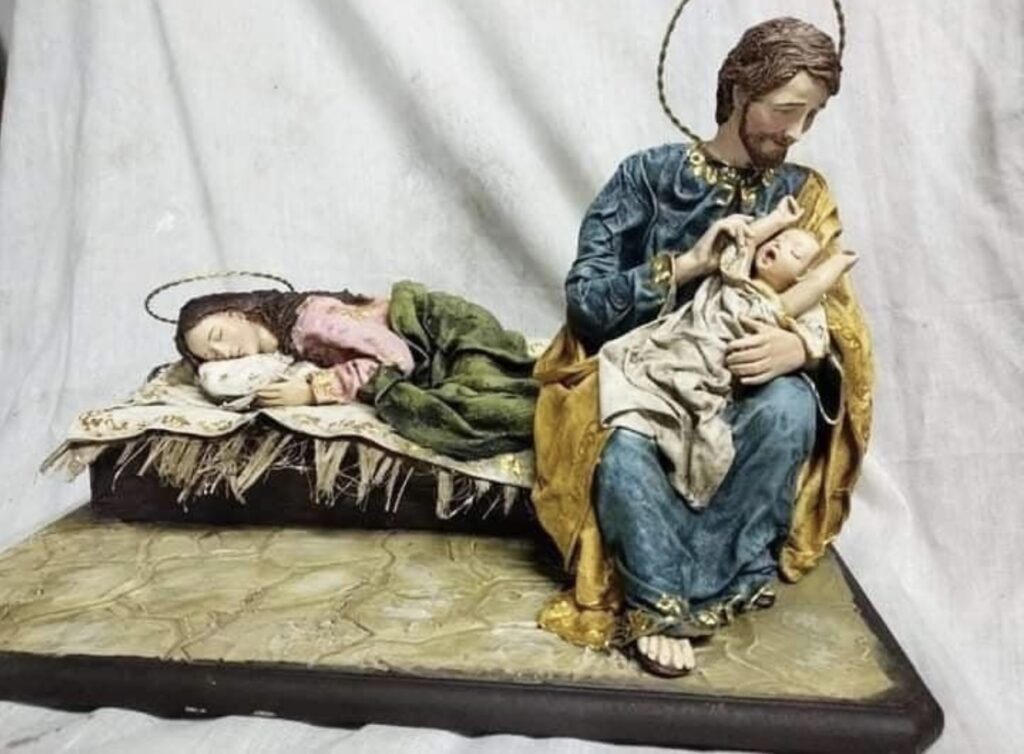
The sleeping Mary: trust that liberates
Mary sleeps because she can. She sleeps because motherhood, for once, is not heroic solitude but shared trust.
Sleep becomes a theological act: entrusting oneself is not a lack of faith, but its highest form.
This image breaks a still-widespread implicit narrative—that of the mother who must carry everything alone. Here care is reciprocal. Here family is covenant, not unilateral sacrifice.
Joseph and a new understanding of strength
Joseph keeps watch. And in doing so, he redefines strength.
Not dominance, not distance, but silent presence.
A form of masculinity that does not lose dignity in caregiving, but finds it there.
It is a fatherhood that does not explain, but protects.
That does not teach from above, but supports from below.
A Domestic Theology
This scene is a true theology in miniature.
It tells us that holiness does not dwell only in exalted moments, but in night shifts, tired arms, and welcomed tears.
That authentic love does not dazzle—it warms.
Like a light left on while someone sleeps.
And perhaps the most daring message is this:
God trusts humanity enough to fall asleep in human hands.
And a man truly becomes a father when he stops explaining and begins to keep watch.